
ISO 9001 · ISO 14001 · IATF 16949 · RoHS / REACH


On Tuesday, a sample roll feeds cleanly through your dispenser. On Thursday, the quote arrives with a different item code and a description that reads “double-sided tape, 25 mm.” If receiving opens a carton next month, what will identify the roll your line approved? Ask the supplier to link the sample label to the production item, its adhesive, carrier and liner, and the roll specification. Until those records agree, purchasing has an open question on the order.
A supplier can qualify for a trial before it qualifies for a production order. Start by identifying who controls the material and the finished roll. Then decide which of the following actions your evidence supports.
Can you release the first production order?
| What purchasing has today | Decision | What to record |
|---|---|---|
| The production item matches the approved sample and roll specification. The trial passed the agreed checks, and receiving can trace the lot. | Release the first production order. | Put the approved item and revision on the PO. Name who signs off changes before shipment. |
| The grade is identified, but only a hand-cut piece has been tested. The supplier can provide a labeled production-format roll. | Authorize a limited pilot. | Specify which trial roll, line and checks the pilot covers. Keep the service or roll-format questions open until results are recorded. |
| The sample code is unexplained, a substitute is proposed, or the candidate failed a required check. | Hold the production order. | Assign the missing record or investigation to an owner. Resume evaluation once the material is identified or the failure is resolved. |
On this page
1. Find out who controls the roll you will receive
Ask the salesperson to walk you backward from the carton label. Who packed the finished rolls? Who slit the wide roll to your width? Who selected the adhesive construction and coated it? One business may do several jobs. A specialist converter may buy a named tape, slit it to a tight width and take responsibility for the delivered roll. That can be exactly what a buyer needs. Trouble starts when each business assumes someone else owns a defect.
| If your concern is… | Ask this party | Evidence to request |
|---|---|---|
| A change in adhesive, carrier or liner | The party that controls the tape construction | Exact grade and revision, plus the route for notifying you of substitutions |
| Rough roll edges, liner damage or variable width | The converting site | Finished-roll drawing or slit specification and a redacted inspection record for a comparable job |
| Mixed lots or an unexplained substitution on reorder | The seller and the dispatch site | A specimen carton label and a packing record that links the seller’s item code to a finished lot |
| A failure on your assembly | The seller’s named technical contact and your process owner | Who takes the complaint, which samples each side keeps, and who decides whether affected stock can be used |
For an overseas order, including one placed with a sales office in China, ask for the seller’s legal name, the production site address and the name that will appear on the shipping documents. If the names differ, ask the seller to map their roles on the quote. A sales company and a converting plant can legitimately be separate. You need to know which site the sample came from, which will fulfill the order and who will answer if the delivered roll differs.
Ask for a line of evidence you can follow at the converting site. If an unannounced width change could stop your line, ask the operator to show a recent slit-width check, identify the gauge used, and walk you through what happens to a roll outside tolerance. A redacted record or a live walk-through can answer a narrow question. If the site cannot connect the check to the finished lot, have your quality lead settle that point before release.
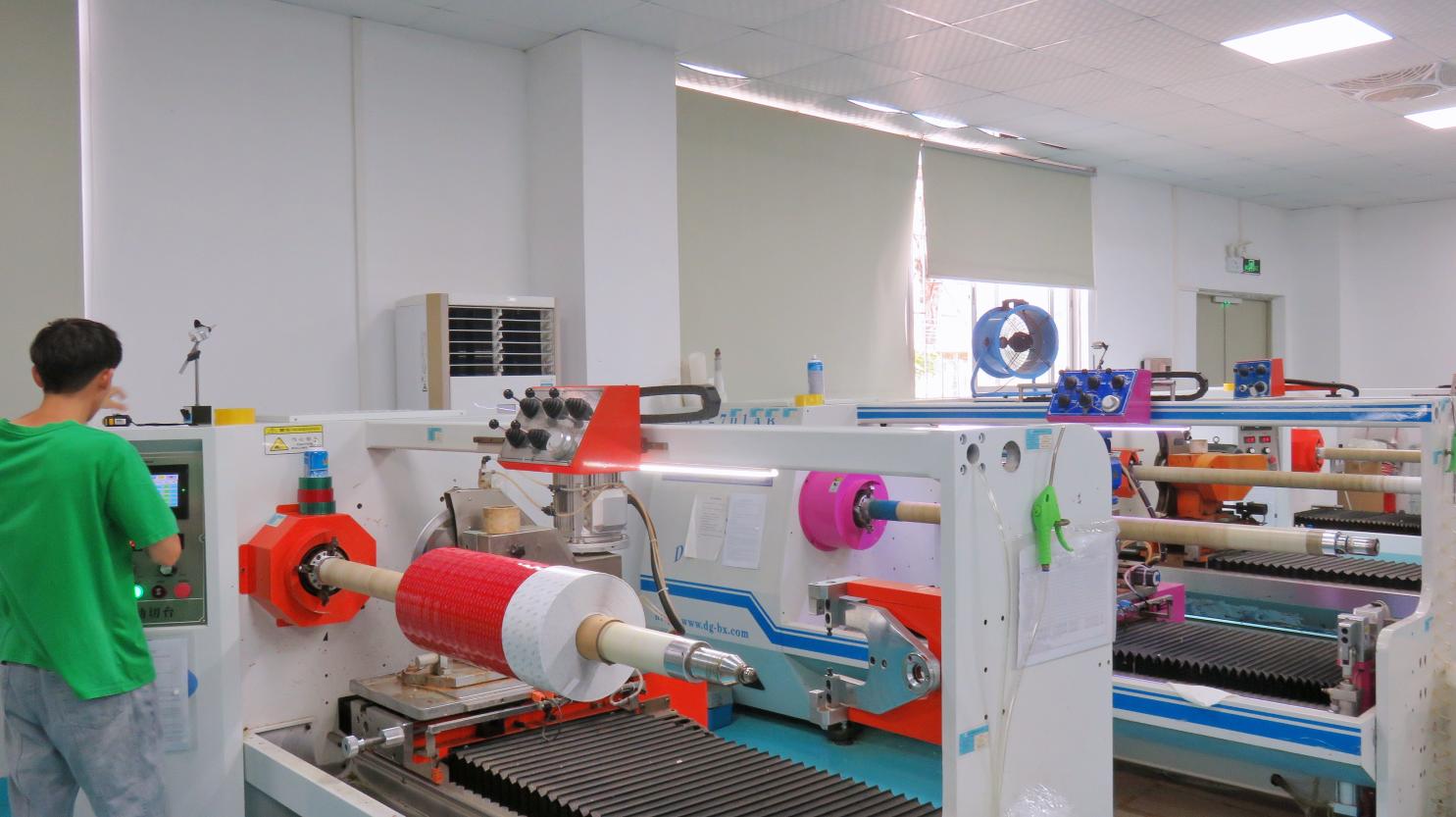
2. Match each document to the decision it supports
Say your team is replacing a 25 mm double-sided tape used to attach a trim strip to a powder-coated housing. It feeds from a dispenser, and operators lift the liner by hand. A supplier sends a certificate, a data sheet and a peel value. All three can be genuine while leaving your main question open: will the delivered roll fit the dispenser and hold the trim on this finish?
| Document or sample | What you can decide | Follow up before approval |
|---|---|---|
| Technical data sheet for the named grade | Whether the construction and stated characteristics justify a sample | Check the revision, liner, units, test surface and which values are typical. Ask what the seller will actually supply to an agreed limit. |
| Management-system certificate, if your customer requires one | Whether the listed entity, site, scope and status fit your purchasing requirement | Verify the certificate with its issuer or the applicable certification database. Keep the product trial as a separate decision. |
| Lot-specific report or certificate of analysis, when required | Whether reported results for the identified lot meet the contract limits | Request the method, units, acceptance range, actual result and lot reference. A generic declaration supplies no measured result. |
| Finished production-format sample | Whether the roll loads, unwinds, applies and performs on your parts under the trial conditions | Record the label, construction, slit specification and trial result. Ask how the first shipment will be matched to that sample. |
Ask which face of the tape was tested, what it was peeled from, and at what angle, speed and dwell time. The public scope of ASTM D3330/D3330M describes checking adhesion uniformity within or between rolls and lots. Section 5.3 also explains why methods A, B, C, E and F cannot rank same-type tapes from different manufacturers for adhesion to a surface. A larger number on a vendor’s sheet will not tell you which tape holds the trim on your powder coat. Run the candidates on parts with your specified finish and judge them against the agreed service requirement.
On this trim-strip job, two reports could both say “ASTM D3330” and answer different questions. Method C measures how a double-coated tape peels from a specified surface. Method D measures the force needed to remove the liner at a specified speed. If the converter sends a Method D result after the trim lifts from the housing, ask for the record covering the housing-side adhesive and check the trial on the actual finish. If the liner tears at the dispenser, use its release result alongside the line trial.
On the September 2024 data sheet for 3M VHB 5952, the note on page 1 identifies the figures as typical. Ask the quoting supplier which limits it will commit to for its own item. For a management-system certificate, match the entity, covered site, status and scope to the work being ordered. Those fields are listed in the IAF CertSearch FAQ. The receiving file still needs evidence tied to the actual roll. When requesting evidence from nibaL, start at the quality and inspection page and specify the tape grade, converting site and records your customer needs.
3. Trace one finished roll backward and forward
Ask the supplier to choose one recent shipped lot and show a redacted example. Start with the label a receiving clerk would actually see. Follow its finished-lot code to the slitting record, then to the parent roll or rolls used. Reverse the exercise: if a parent roll were held for investigation tomorrow, could the supplier identify which finished lots and shipments to check?
Trace back from a carton
- Read finished lot F-17 on the carton.
- Find F-17 on the slitting work order.
- Read the parent-roll ID: P-42.
Trace forward from P-42
- Find every work order that used P-42.
- List F-17 and any other finished lots from those orders.
- Match each lot to cartons still held or shipments already sent.
Follow the identifiers rather than asking for unrestricted access to production files. Customer names and commercial prices can be masked. A redacted packing line, work-order entry and parent-material reference are useful if the identifiers still join up. If two parent rolls fed one job, both should appear somewhere in the record. If the carton carries only a product code, ask where receiving finds the lot for an individual roll once that carton has been opened.
Check the date behind the lot code. Ask which date starts the shelf life for the exact tape grade and how receiving can read it on a core, carton or lot record. For F-17, ask whether the date shown is the manufacture date of P-42 or the date it was slit. If the manufacturer counts from manufacture, calculate the remaining life from that date. Ask for the specified storage temperature and humidity and the packaging recommended for the shipping route, including a moisture barrier if the grade needs one.
On the trim-strip order, record who retains the approved sample, what its label says and which document controls the next order. If the sample was hand-cut from a sheet, use it to screen bonding on the actual finish. Leave width control, winding, core fit and liner handling open until the converting site supplies roll-format material. A supplier that cannot disclose its upstream commercial source may still demonstrate traceability using coded references. If it cannot connect the codes, keep the lot-trace requirement open.
If a roll is disputed, agree who does what. For the F-17 example, receiving records which cartons are still on hand, quality identifies other shipments sharing P-42, and the supplier checks the converting record and retained material. Give one person responsibility for the disposition and the date of the next update. That lets the line isolate the relevant stock while the cause is investigated. A shared parent roll identifies stock to review. Quality still needs the inspection or trial evidence to decide which lots can be released.
4. Set the pilot conditions before the sample arrives
Give the supplier the approved drawing revision, the two bonding surfaces and the intended roll format. In the trial record, separate the part owner, the line operator and the purchasing approver. Have the part owner set the service requirement, the operator record handling problems, and purchasing identify exactly which supplier item is under review. Agree on sample quantities, lots and acceptance limits for your application before either side sees the results.
For the trim-strip example, label the current approved tape as the control. If two suppliers are bidding, give each candidate a separate trial ID. Run all three on housings with the same specified finish. Record finish lot, preparation, application pressure, assembly time and dwell. Follow each candidate’s documented application instructions and record any differences. If the candidate requires another cleaning step, you are comparing two production routes. Include that step in the handling and cost comparison.
| Trial question | What the line records | Decision |
|---|---|---|
| Will the roll run in the dispenser? | Core fit, width, winding direction, liner breaks, and unusable starts or ends | Fix the converting specification and rerun if the process stops or damages the roll. |
| Can an operator transfer the assembly on time? | Time to the next operation, edge lift or movement at transfer | Hold early-handling approval if the trim shifts. Test a process change on a fresh set of parts. |
| Does it hold through the intended service exposure? | Load direction, actual finish, temperature or other agreed exposure, and where separation occurs | Use separate specimens for the full dwell and service check. Approve only the conditions the trial covered. |
| Is the supplied material identifiable afterward? | Roll label, finished lot, retained sample and signed trial record | Resolve an unmatched lot before authorizing the first production shipment. |

If both candidates pass, procurement can choose on cost and supply terms. If only one passes, compare its quote with the cost of retaining the current process. If both fail, first ask whether the control reproduced normal line behavior. When the existing approved tape also fails unexpectedly, check the parts and trial setup before attributing the result to either supplier. If the liner or carrier has changed, check the carrier selection guide. If the supplier proposes a different adhesive for the same finish, use the adhesive chemistry guide to identify what changed before you design the next trial.
What can purchasing sign when the bond passes but the liner tears?
Suppose both the control and the candidate hold the trim through the agreed service check. The control also dispenses cleanly. On the candidate roll, the liner tears as the operator pulls it around the dispenser nose. The operator can finish the run by peeling the liner by hand. That produces bonded parts, but the order calls for a roll that runs through the dispenser. Record the bond result as passed under the tested conditions and the dispensing check as failed. Hold the production order.
Give the converter the trial ID, the finished-lot label and a photo of the tear at the dispenser nose. Ask which item it proposes to change. If it proposes a different liner, request a labeled roll with the new liner code. Have the operator repeat the unwind, peel and placement checks at the intended line pace. Have quality decide which bonding checks also need repeating after the change. If the replacement includes a different adhesive grade, the original bond result belongs to the old grade; qualify the new construction on the housing.
One useful entry in the purchasing file would read: Limited trial only. Original roll held the trim but failed dispensing. Converter to identify revised liner and send a production-format roll. Line lead to record the rerun; quality to review before purchasing releases the PO. Add the actual item, revision, trial date and responsible names before sending it. This gives the next shift a clear answer if a salesperson calls to ask whether the tape is approved.
5. Compare cost per usable meter and agree what can change
Suppose both trial rolls pass the technical checks. Both are the same width, and prices below use the same delivered-cost basis. These are illustrative inputs for the trim-strip job. Replace the usable lengths with what your operators actually record across representative rolls.
| Quote input | Supplier A | Supplier B |
|---|---|---|
| Delivered price per roll | $9.00 | $10.40 |
| Nominal length | 50 m | 55 m |
| Usable length in this example | 48 m | 52 m |
| Delivered cost per usable meter | $0.1875 | $0.2000 |
| Whole rolls for 1,000 usable m | 21 rolls = 1,008 usable m | 20 rolls = 1,040 usable m |
| Amount payable for those rolls | 21 × $9.00 = $189.00 | 20 × $10.40 = $208.00 |
For one 1,000 m run with single-roll ordering and no stock on hand, A costs $19 less at checkout. Its 21 rolls require 20 changes after the initial load. B’s 20 rolls require 19. If that extra change costs more than $19 in downtime, B costs less for this run before giving either supplier credit for leftover material. Recalculate the whole-roll counts for your actual order and carton multiples.
The yield can also change the choice. With B at $0.20 per usable meter, A breaks even at 45 usable meters per roll ($9 ÷ $0.20). Below 45 m, B has the lower material cost per usable meter. If your usable length already excludes rejected starts and ends, count those losses only once.
Now ask each supplier to quote the first order and the repeat order separately. Record tooling or setup charges, pack multiples, minimum order, freight basis and the date from which lead time runs. Keep the annual forecast distinct from the quantity you are committing to buy. A quote that assumes twelve uninterrupted monthly releases may change if you order twice a year.
Turn a promised lead time into a question about your order. For the quoted width and pack size, which material is already available, what still needs slitting, and when does the clock start? Ask for separate dates for the pilot roll and the first shipment. If your line relies on a short replenishment window, agree who will flag a delay and how early, then put that agreement with the quote.
Before issuing the purchase order, agree which changes need advance notice or reapproval. For the trim strip, a liner substitution can change dispenser behavior even if the adhesive stays the same. Identify the person who can approve the change, the trial to repeat, and how old and new stock will be labeled. When a supplier proposes an alternative mid-order, save its new code and revision against a separate evaluation. That preserves the ordering reference for the material already approved.
6. A copy-ready request for quotation
Send the same request to each supplier so engineering and purchasing can compare the replies side by side.
Subject: RFQ for double-sided tape on [part or project name]
Please quote double-sided tape for a trim strip bonded to a powder-coated housing. Our drawing revision is [rev]. The assembly drawing and finish details are attached. The dispenser takes [core ID], [roll width and tolerance] and [winding direction]. We expect [first-order quantity] and forecast [annual usage]. Please state your quoted roll length, pack size, delivered-price basis and any one-time charges.
Identify your exact tape grade, liner, converting site and finished-roll item code. Please provide a current data sheet, a sample roll label and a redacted example linking a shipped lot to the material used. Identify any difference between the trial roll and production supply.
Please state the shelf life for this grade, the date it runs from and how to read that date or the use-by date on the label or lot record. Quote the minimum remaining life at dispatch and the expected remaining life at delivery to [destination]. Include the recommended temperature, humidity and transit packaging.
We will check dispensing, transfer at [time], and service under [load, temperature and duration]. For any peel result, identify the test method, tape face, test surface and lot. Please flag any condition outside your written recommendation. Name the person who will confirm the sample plan, handle a lot complaint and notify us of changes before shipment.
When replies arrive, mark the release decision on the purchasing file. Record the quoted code and revision, approved sample label, trial reference, open issue, owner and due date. For the first receipt, give receiving the expected roll label and the action to take if the code, lot or remaining shelf life falls outside the agreed terms. That turns the trial into a check someone can actually perform at the dock.
If the supplier will deliver shaped pads on a liner, add the drawing tolerances, liner presentation and inspection features from the die-cut adhesive pad guide. If the order also uses branded cores, individual roll labels or custom cartons, use our private-label packaging guide to check packaging artwork and packed samples before releasing print files. For an initial manufacturing discussion, the nibaL converting capabilities page outlines the processes to ask about.
First delivery: two carton labels match and one does not
Suppose the revised roll passes its agreed checks and purchasing issues the first PO. Receiving now finds the approved item and revision on all three cartons. Two cartons carry finished-lot F-17 and a date code that matches the packing record. On the third carton, the lot field is unreadable. A matching item code tells receiving what was ordered. It cannot tell the team which parent material went into that third carton or how much shelf life remains.
Record the carton identifier and quantity, photograph the label, and keep that carton separate while the seller checks its records. For the two identifiable cartons, quality can complete the PO’s remaining checks and authorize a partial release if the order permits it. If the customer requires a single accepted lot for the whole delivery, or staff can no longer tell which rolls came from which carton, keep the affected delivery on hold. Mark the quantity and location of the held stock so it cannot reach the line by mistake.
For the two cartons marked F-17, take the sample called for on the PO. Measure slit width against the drawing. If thickness is specified, check whether that dimension includes the liner before comparing readings. Look across the roll face. If successive wraps have shifted sideways into a cone, record “telescoping,” photograph the roll beside its lot label and set it aside for quality review. A readable label lets you trace that roll. The drawing, inspection record and agreed disposition tell receiving whether it can go to the dispenser.
To close the discrepancy, ask the dispatch site to trace the carton identifier to its packing line and finished lot. Receiving then checks the documented manufacture or use-by date against the remaining-life requirement. A dated packing extract tied to that carton gives quality evidence to review. A replacement sticker copied from a neighboring carton does not. Record who accepted the evidence and which quantity was released or returned.
Questions before signing the PO
What if the seller will not identify its upstream coater?
Request a redacted work order that links the finished lot to a stable parent-material code. Ask the seller to trace back from the carton and forward to other affected lots. If the PO names an approved source, check what the restriction covers. A named tape grade and an approved converting site are two different purchasing conditions. Ask for a packing or supply record that ties the offered lot to the named source. If the seller claims brand authorization, verify its status with the brand and match the lot separately. If purchasing is offered stock from another site or channel, get the customer’s written deviation for that lot before release when the contract requires it. See the two-way trace check.
Do we need a certificate of analysis with every shipment?
Check your purchase specification or customer requirement. If it calls for a lot report, agree on the item, lot, test method, limits, actual results and when receiving gets the report. Otherwise, decide with quality which receiving checks and records the application needs. The document comparison shows what each item can establish.
How much shelf life should remain when an overseas order arrives?
Work backward from the date you expect to use the last roll. For example, if incoming inspection and planned consumption together take ten weeks after receipt, the buyer needs at least ten weeks at receipt, plus any agreed allowance for delays. Add expected transit time when setting the dispatch minimum. Put both checkpoints on the order and give receiving a lot-code or use-by-date check. Use the manufacturer’s storage conditions for the quoted grade.
Technical resources
External references marked ↗ open in a new tab.
- ASTM — D3330/D3330M, Peel Adhesion of Pressure-Sensitive Tape. See §§1.1.3–1.1.4 for Methods C and D and §§5.3–5.5 for limits on interpreting peel results.
- 3M — VHB Tape 5952 technical data sheet. September 2024. Page 1 explains typical figures. Page 5 shows how the manufacturer dates and specifies storage for this particular grade.
- IAF CertSearch — Certification body FAQ. Fields associated with a management-system certification record.
- Pressure Sensitive Tape Council glossary. The entry for telescoping describes the sideways movement of layers on a wound roll.
ABOUT NIBAL TAPE
Discuss Your Tape Sourcing Project
nibaL Tape works with buyers sourcing double-sided tape and converted adhesive parts. Learn more about nibaL.
Send the roll specification or part drawing, both bonding surfaces, trial conditions and planned order quantity. If you are moving from sample to production, include the sample label and quoted item code so we can discuss the match.