
ISO 9001 · ISO 14001 · IATF 16949 · RoHS / REACH

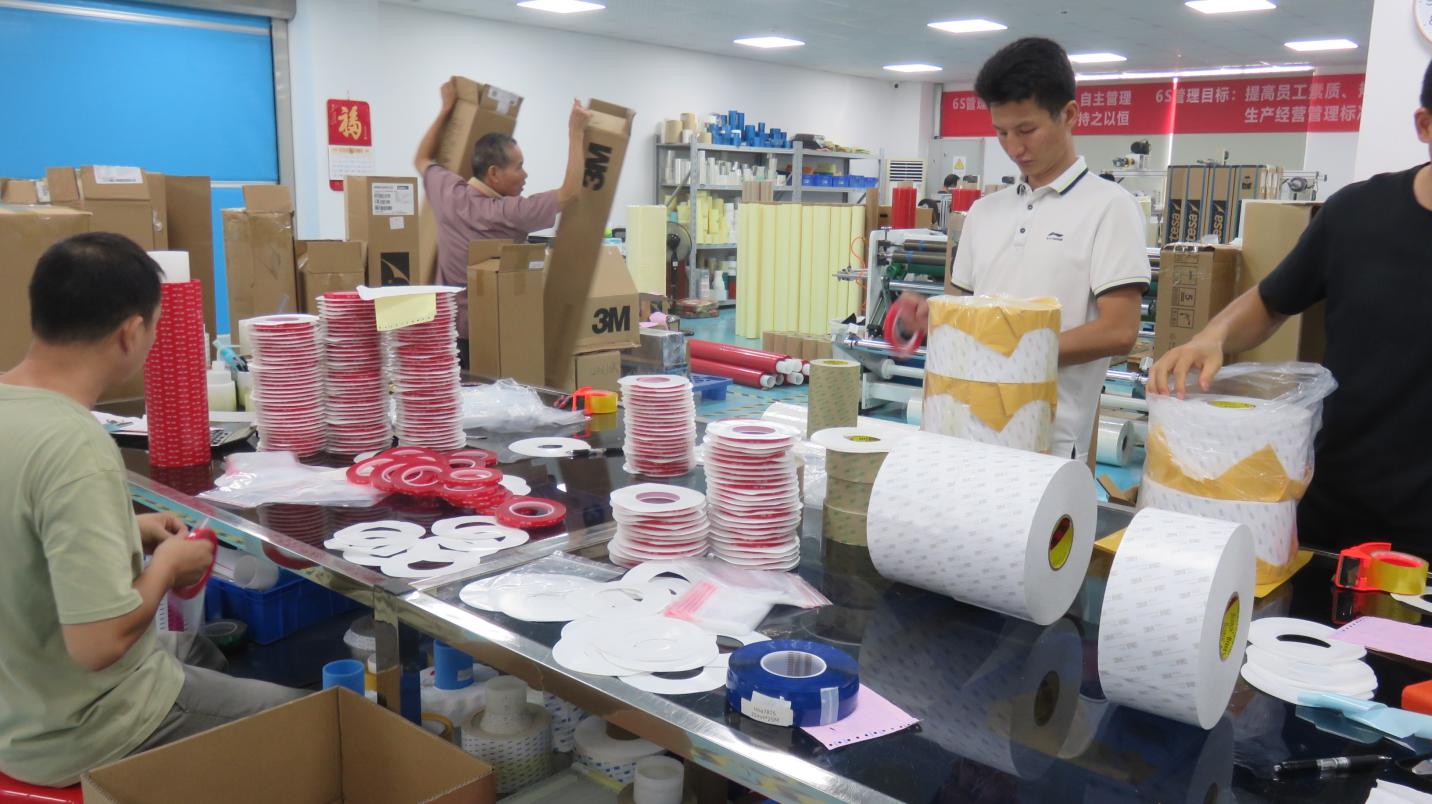
The printer has a carton proof marked 24 rolls. Your revised packing sheet says 20. The order is still for 960 rolls, and the logo inside each roll looks right. Which files can go to print?
For this order, keep the signed core artwork and individual roll label if their specifications are unchanged. Hold the carton proof. Before the revised case goes into circulation, purchasing needs to confirm how many cases it is buying, and receiving needs to prove what one case will add to stock. If the old number is on the box, check the approved file and which label the packer actually used. If the right number is on the box and the warehouse still books 24, the correction belongs in the warehouse system.
This worked example follows a distributor buying one 25 mm double-sided tape under its own brand. The tape grade is already selected. If your team is still qualifying the converter or proving the tape on the line, start with the first production order guide.
On this page
Decide where the brand and item number belong
Ask for a marked-up picture of an unpacked roll, a wrapped roll and a closed case. Mark where the buyer sees the brand, what gets scanned at each point, and which parts the converter should quote. A request to print a logo inside the paper core gives the printer no instruction to put ink on the tape itself.
| Packaging component | What the buyer needs to decide | What to get back before signing |
|---|---|---|
| Inside of the roll core | Logo orientation, repeat and appearance. Does the roll need to fit a specified dispenser? | Printable area and drawing revision. Where fit matters, a finished roll to try on the named equipment. |
| Individual roll label | Which SKU the customer buys, what size and description appear on the label, and where it sits on the wrap. | Label proof and a wrapped sample showing where the seam falls and where someone can scan the roll. |
| Outer case | Who orders by case, who receives it, the count and unit of measure, and whether the graphics are printed on the carton or on an applied label. | A case proof tied to the packed quantity, the case item record and a sealed sample in the agreed configuration. |
Settle the units before commissioning artwork. Here, the customer can buy one roll, and the fixed-count case is also an orderable trade item identified under GS1. A carton assembled solely for transport can have a different identification requirement. Confirm the trading partner’s order and receiving units separately. GS1 US packaging levels
When 24 rolls per case becomes 20, check both ends of the order
The distributor still wants 960 identical rolls. Under the original specification, 960 ÷ 24 gives 40 cases. Under the revised specification, 960 ÷ 20 gives 48 cases. That is eight more cartons to pack, label and move. Two different systems can get this wrong.
| Where the old quantity survives | What happens in this example | What to correct |
|---|---|---|
| The purchase order still says 40 cases and the supplier fills each with 20 rolls | 40 × 20 = 800. The order is 160 rolls short. | Purchasing changes the line to 48 cases of 20, or uses 960 each with the agreed 20-roll pack instruction. Ask the supplier to acknowledge the revised quantity and unit. |
| The warehouse receives the correct 48 cases but credits 24 rolls for each | 48 × 24 = 1,152 on the books. With 960 rolls physically received, stock is overstated by 192 rolls. | Receiving tests one 20-roll case against the approved item record and checks how many individual rolls the transaction posts. |
These are separate failure scenarios. A PO already written for 960 individual rolls keeps its ordered quantity. Update its packing instruction and case count wherever downstream teams use those fields. Likewise, 20% more cartons does not establish a 20% freight increase. Get the packed outer dimensions and gross weight, plus the loading arrangement if shipping on pallets, before comparing freight quotes.
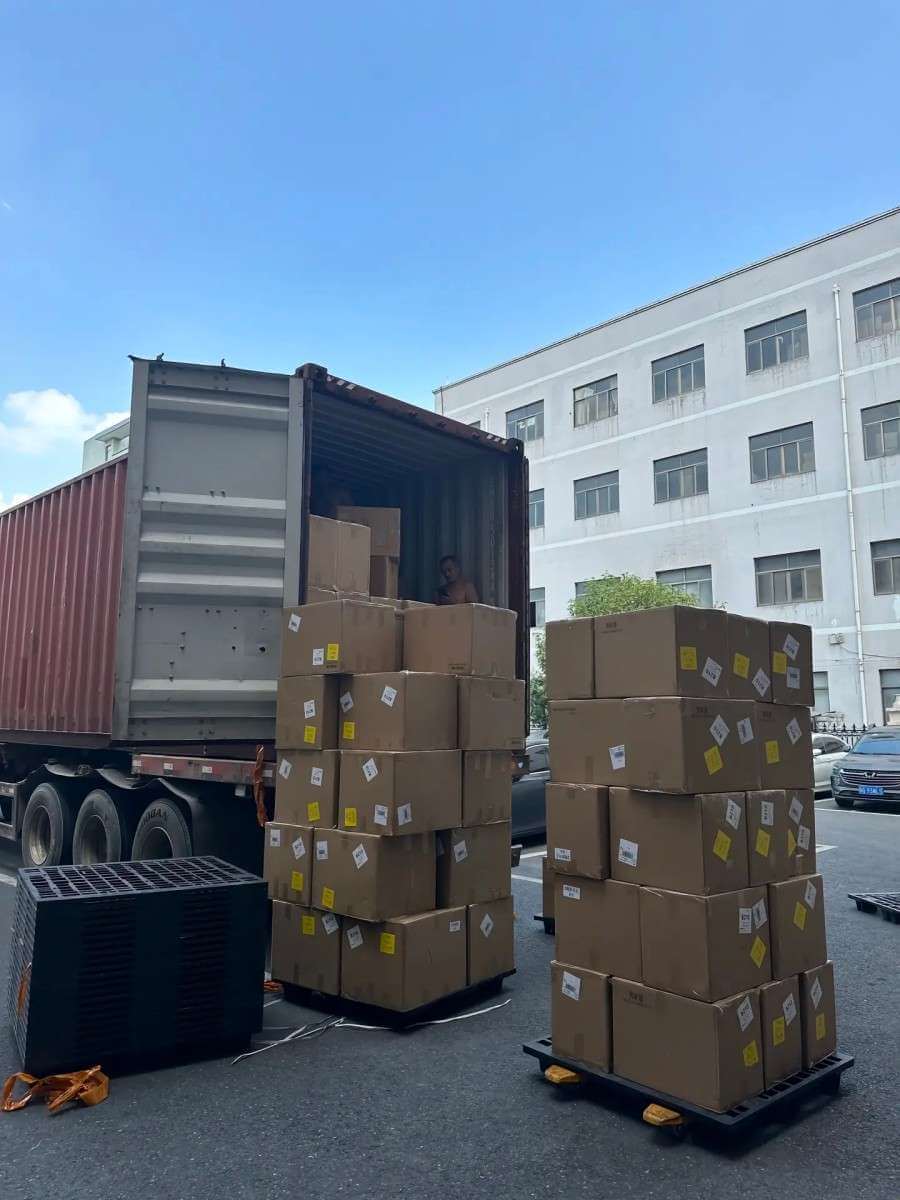
Which GTIN changes when the case goes from 24 rolls to 20?
For this fixed-count GS1 trade case, the 20-roll configuration gets a new case-level Global Trade Item Number (GTIN). The individual roll is identical and keeps its GTIN. If the case forms part of an existing higher-level trade item, review that level under the same rule. A pallet used solely to carry this shipment is a separate logistics question. GS1 GTIN Management Standard, §2.8
The distributor in this example owns the private label and the product specification. Its brand team assigns the new case GTIN and sends the approved digits to the converter. The printer puts that number on the case proof. Receiving checks that the printed number brings up the 20-roll case in its system. Name the person responsible for each handoff before releasing the file. GS1 guidance on who assigns the GTIN
Put the new case GTIN, the words “20 rolls per case,” the carton file revision and the pack-specification revision on the same approval record. Keep the 24-roll configuration distinguishable if inventory or open orders still use it. Changing the old record’s conversion factor in place could cause a genuine 24-roll case to book as 20. Give purchasing and receiving a changeover point they can recognize, such as the first PO line covered by the new specification.
Use the PDF for copy and the packed sample for fit, color and scanning
Start with the printer’s current template. Give the printer the SKU, approved wording, logo assets, human-readable barcode digits and intended packaging level. Ask for the dieline revision, printable area and accepted file format. On the returned proof, check the copy, dimensions, placement, folds and the revision in the approval record. If the printer needs editable Illustrator files, send the linked graphics and fonts you are licensed to share in the agreed format. Ask the printer to open the delivered files and check for missing links or substituted type before making the next proof. Adobe’s guide to packaging Illustrator files
Leave room for variable print. If the packing specification calls for a lot code or date of manufacture, mark the overprint area on the roll-label or case template. Print the longest expected entry on a packed sample. Check that the characters stay legible and clear of the seam and barcode quiet zones. If the rolls will enter the United States and be sold individually, ask the importer to confirm the origin wording and where the ultimate purchaser will see it after the distributor opens the case. U.S. country-of-origin marking rule (19 CFR § 134.11)
Try the finished roll on the specified dispenser. An approved core logo can stay approved if the roll jams. Check the core opening for damage or distortion, compare the agreed dimensions to the signed drawing, and try the sample on the named mandrel. A core can slip onto the spindle while the roll’s outside diameter still rubs the housing. Record whether the finished roll mounts, turns and unwinds as intended. If the order calls for the logo to be visible during use, view the mounted roll from the operator’s side. A hub that hides the imprint calls for a new logo placement proof even when the roll fits. That artwork change alone leaves the case item record intact. Ask for a corrected sample before releasing rolls that use the affected core. ISO 11093-4 describes dimensional measurements for paper and board cores. Use the buyer’s drawing and equipment requirements to set the fit criteria. ISO 11093-4
Check the label on the wrap the customer will receive. Place the production-intent label on a representative roll. After the agreed handling, look for a lifted edge, a wrinkle through the bars or a seam across the scanning area. If the same label reads flat and fails on the roll, change the position or label material and repeat on the wrapped sample. Keep the failed sample or a marked photo so the printer knows which feature to correct. This check concerns the packaging label and its wrap. The saleable double-sided tape has its own performance specification. GS1 print and placement checks
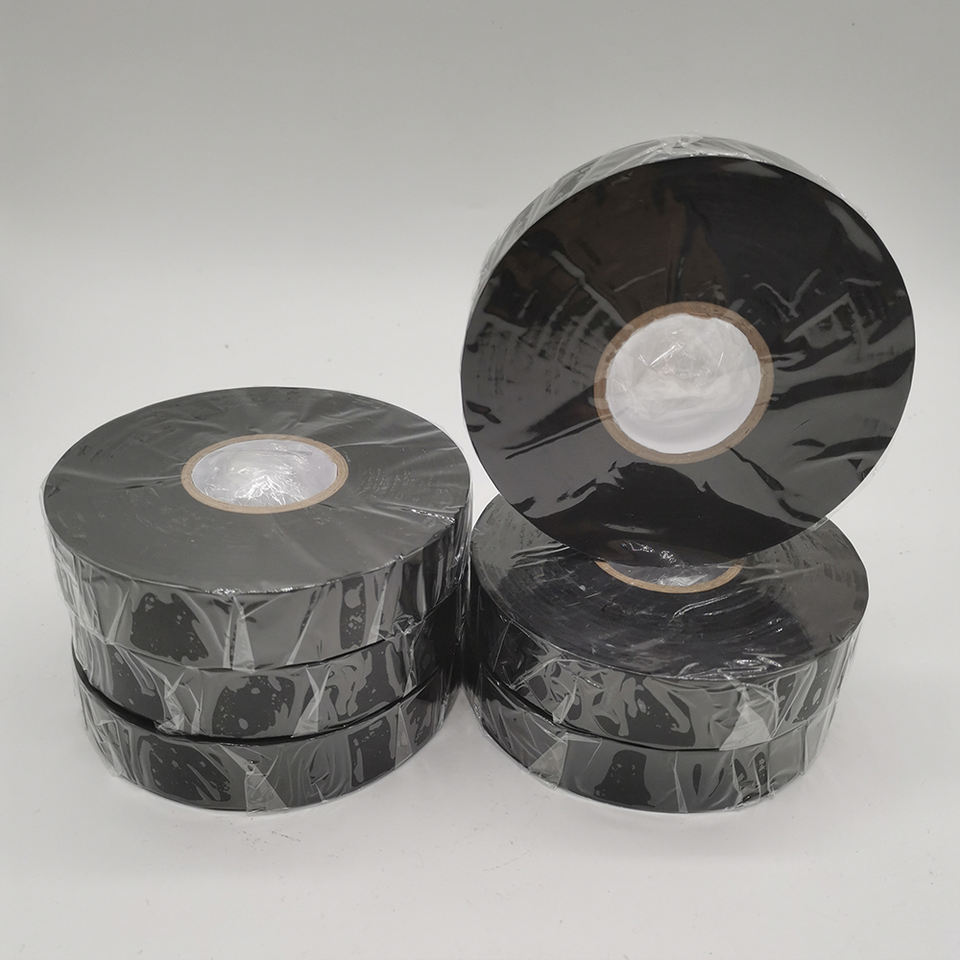
Sign the color on the material that will be printed. For a color-critical logo, identify a physical reference for the white roll label and another for the kraft carton. Record each reference beside the artwork revision and agree how the samples will be viewed. If your order uses an instrument tolerance, agree the measurement conditions, formula and limit with the printer. A buyer can approve the spelling and layout while the kraft color sample is still outstanding. ISO 3664 viewing conditions
The barcode reads. What did the warehouse receive?
Take one sealed 20-roll sample and the signed packing sheet to receiving. Capture the decoded identifier first. Then run a test receipt and inspect the posted unit and quantity. Where testing touches live stock, use your warehouse’s test procedure so the sample does not create an extra inventory receipt.
| What receiving sees | Where the error is | What closes the issue |
|---|---|---|
| The case is packed with 20 rolls. Its code decodes to the old 24-roll case GTIN. | The wrong case identifier is on the sample. Trace the label back to the approved file. If the file was right, check label selection at packing. | Correct the artwork or packing instruction that caused the mismatch, segregate affected labels or cases, and scan a corrected sample. |
| The case decodes to the approved new GTIN. The system still credits 24 rolls. | The item record or case-to-roll conversion points to the old quantity. | Correct that mapping. Repeat the receipt with the same correctly labeled sample and confirm it credits 20. The printed label can be retained. |
| The right identifier is in the artwork, but the scanner cannot consistently read the sealed case. | Placement, packaging or print quality still needs investigation. | Compare the flat label with the packed case. For a linear barcode, check the quiet zones (clear space beside the bars) against the specification for that symbol. A carton border or seam can intrude even when the printed digits are correct. Test the revised packed sample with the receiving equipment. |
A receiving test answers what your warehouse can read and book. Where the trading partner specifies a print-quality grade, request a verifier report for the relevant symbol and application. Record the report reference alongside the signed sample. A high print grade cannot tell you that a warehouse has assigned the right quantity to the item. GS1 barcode verification guidance
Give the printer an approval it can act on
Use one line for each decision. Record the exact filename and revision, the unit covered, what the signer authorized and the sign-off date. Assign the outstanding check to a named person. The following is an example of how the record might look while the carton change is under review.
| Item and revision | Decision today | What is still needed and who owns it |
|---|---|---|
| Inside-core logo, revision A | Brand approves the copy and layout. The art can be carried forward. | If dispenser fit is outstanding, packaging or operations signs the corrected finished roll against the named drawing before releasing the affected rolls. |
| Individual roll label, revision A | Carry forward its previous approval if the SKU, stock, wrap and placement all match the signed sample. | A changed label stock or wrap reopens the relevant physical check. The packaging owner records the replacement sample. |
| 20-roll carton, Case-20-RevB.pdf | Authorize a sample print of this file for a sealed case. | Brand checks the printed sample as agreed. The nominated print-release owner records when the production run may start. |
| 20-roll case item record and shipment | Receiving confirms that one case posts 20 rolls. Purchasing reconciles 48 cases to the PO for 960 rolls. | The designated shipment owner records release against the signed pack specification and order after the outstanding checks close. |
An instruction such as “Revision B approved for one packed sample. Production print pending the signed kraft proof” lets the printer make progress without committing the full carton run. Send purchasing, the converter, the printer and receiving the same revision. Ask the printer to identify any remaining old labels, plates or printed cartons and how they will be kept apart from stock for the new order. Agree how valid 24-roll orders will continue to be filled if both packs are in use.
A private-label packaging RFQ to send with your artwork
Subject — Packaging quote for [tape SKU], 960 rolls, 20 rolls per case
Please quote one individually wrapped, labeled roll as the sellable unit and one fixed-count case of 20 rolls as the orderable case. Our example order totals 960 rolls in 48 cases. We want our logo inside the core. The tape face will be unprinted.
- Please return the current templates and printable areas for the core, roll label and case. List the accepted artwork formats. Mark where any required lot code or manufacture date will print. We will confirm the origin wording and placement with our importer before artwork release.
- Quote each printed component separately. State its MOQ and unit of measure, setup or plate cost, repeat-order charge, and the charge for changing only a case count or barcode. If the print run exceeds our order, say who owns the unused stock and what happens when artwork changes.
- Quote the samples needed for approval. These include a finished roll for [dispenser model or drawing, if applicable], a labeled roll on the proposed wrap, and a sealed 20-roll case. Identify which colors or materials are representative. If we supply a channel specification for barcode verification, quote the report separately.
- Give packed outer dimensions, gross case weight and, where relevant, the proposed pallet arrangement. Label estimates as provisional until the representative case is packed.
- Give the lead time and the event that starts each stage for proof, physical sample, production and repeat order. State whether timings are in working or calendar days. Identify changes that require another proof, plate or approval.
Our brand team will supply the approved roll GTIN and the new 20-roll case GTIN. Please return a proof for each packaging level showing the supplied number. We will compare a test scan of the sealed case with our 20-roll item record. Attached artwork revisions: [core file], [roll-label file], [case file]. Please identify any open item that would change price or the production start date.
For a packaging quote, send the tape reference, roll and case quantities, artwork revisions, and the sample decisions your team still needs to make. nibaL OEM capabilities · Request a quote
Technical resources
References marked ↗ open in a new tab.
- GS1 US packaging levels
- GS1 GTIN Management Standard, §2.8
- GS1 guidance on who assigns the GTIN
- Adobe’s guide to packaging Illustrator files
- ISO 11093-4
- GS1 print and placement checks
- ISO 3664 viewing conditions
- GS1 barcode verification guidance
- U.S. country-of-origin marking rule (19 CFR § 134.11)
ABOUT NIBAL TAPE
Discuss Your Private-Label Tape Packaging
nibaL Tape works with buyers sourcing double-sided tape and converted adhesive parts. Learn more about nibaL.
Send the tape SKU, order quantity, rolls per case and current core, roll-label and carton artwork. Include the dispenser model or receiving requirements if these affect your sign-off.